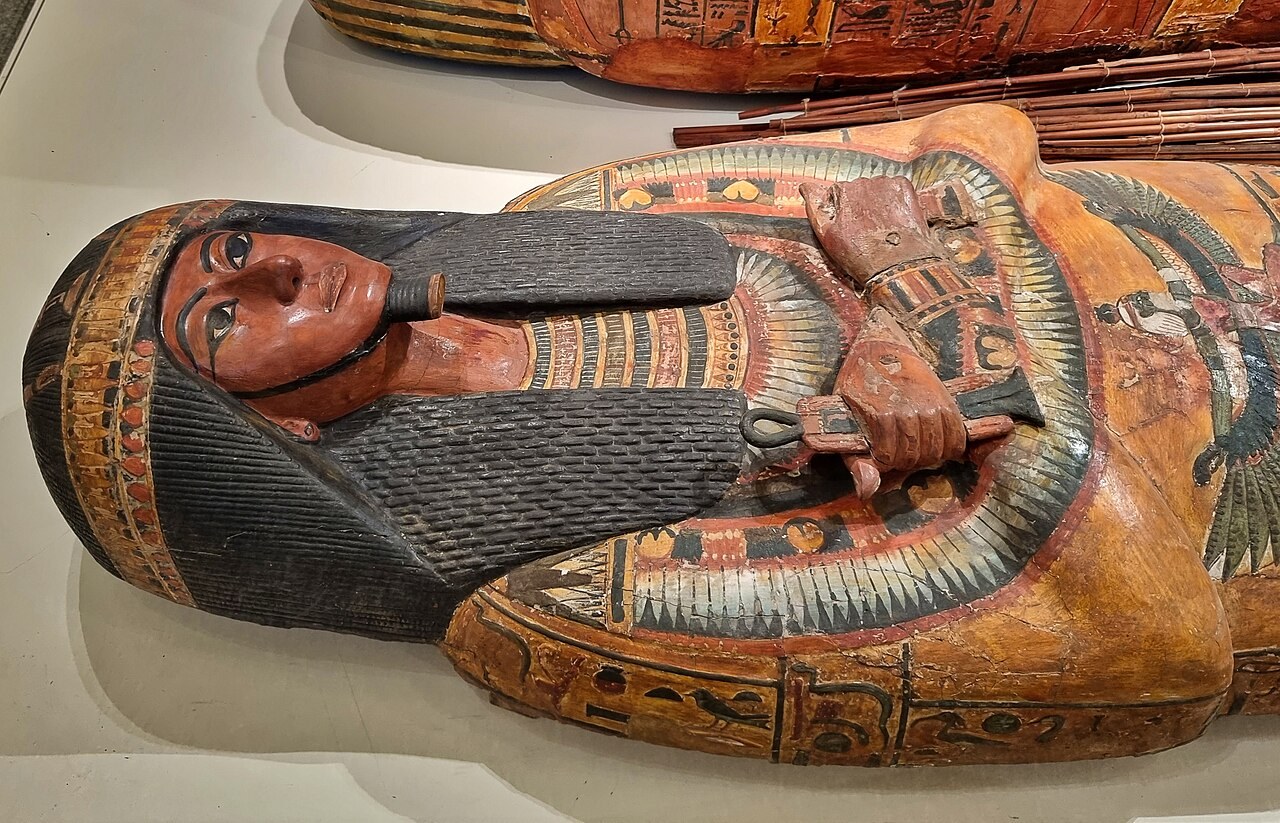
A museum reconstruction can restore scale, sequence and missing relationships. It also selects one possible arrangement. Read models, reassembled fragments and immersive rooms as evidence-based interpretations rather than transparent windows into the past.
Identify the kind of reconstruction
A physical model, digital image, rejoined object, replica, reconstructed room and gallery grouping solve different problems. Name the format before judging it. A model can clarify geography but simplify surface; a reassembled wall can reveal sequence while depending on modern supports; a replica can restore handling or color without being original fabric.
Separate original, restored and modern material
Look for changes in texture, color, edge and support. Museums may deliberately distinguish fills and mounts, but visual inspection cannot settle every intervention. Use the label or conservation note. The aim is not to rank original parts as “real” and additions as false; it is to understand which elements carry ancient evidence and which make that evidence legible or stable.
Ask which date has been reconstructed
Buildings and objects change through use, repair, alteration and reuse. A reconstruction must usually select a moment. Find out whether it represents first construction, a later phase, an excavated state or a modern proposal. Combining elements from different dates can be useful for explanation, but that choice should not become an accidental claim that everything existed together.
Look for the missing alternatives
A probable roof height, color, body position or fragment order may have more than one plausible solution. Diagrams that show alternatives or dotted lines preserve this uncertainty. If only one polished result is shown, ask which parts are secure and which depend on comparison. Confidence can vary within a single reconstruction.
Read gaps as designed information
Visible spaces between fragments can show how much survives and prevent modern completion from overpowering the evidence. In other cases, missing areas are filled to support structure or clarify form. Notice whether the museum marks joins and losses consistently. A gap is not empty when it communicates the limits of reconstruction.
Test scale and viewpoint
A model invites an overhead view that ancient users may never have had. An architectural fragment at eye level may originally have been far above a procession. Record your gallery viewpoint and compare it with the proposed ancient one. Reconstruction restores some relationships while inevitably changing distance, movement, light and surrounding activity.
Compare the reconstruction with one fragment
Choose a single original element and list what it independently establishes: material, carving direction, surviving pigment, join or inscription. Then list what the larger reconstruction adds. This check prevents the persuasive whole from erasing the fragmentary basis and shows why careful reconstruction can be valuable when its reasoning remains visible.
Notice the museum's practical constraints
Weight, conservation, visitor circulation and available space affect what can be rebuilt. A low wall may represent a structure that cannot be safely completed; a digital view may supply inaccessible angles. Practical compromise is part of the display history. Distinguish it from an archaeological claim and ask how the museum signals the difference.
Primary sources reviewed 28 July 2026: NMEC ↗ · GEM collection ↗. Displays and visitor conditions may change.