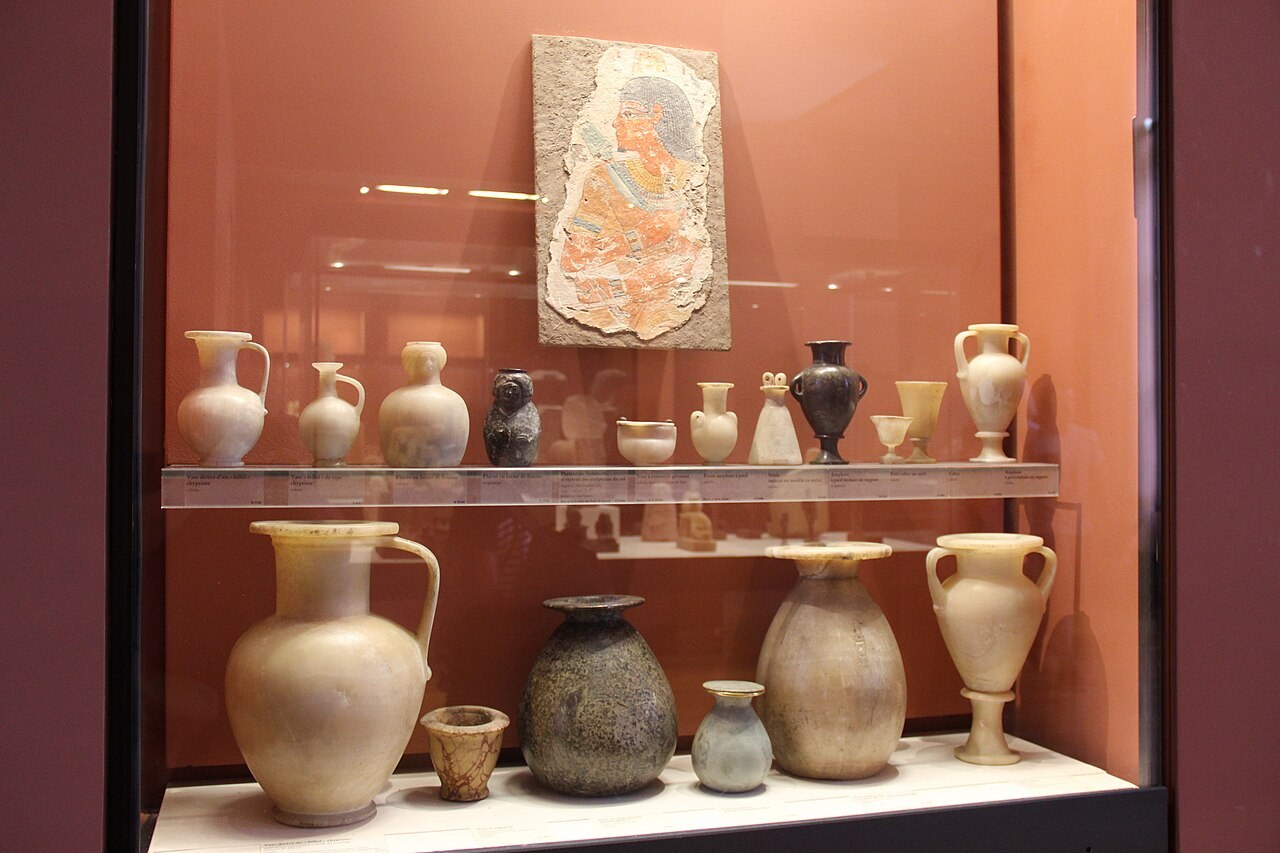
Museum stories of daily life are built from selective survival. Vessels, tools, textiles, furniture and models can reveal repeated practice, but they do not form a complete photograph of an ordinary Egyptian day.
Start with the action the object enables
Ask how a vessel was held, a tool gripped, a textile worn or a container opened. Shape, weight, capacity and wear can narrow the possibilities. Function written on a label is a useful conclusion to test against these features, not a reason to stop looking at the object's practical design.
Distinguish use from representation
A model of brewing, agriculture or a workshop represents activity but may have been made for a burial. Its selected figures, scale and repetition belong to that purpose. Compare represented tools with surviving examples when possible. Practical knowledge and ritual meaning can coexist without making the model a literal snapshot.
Read wear without overclaiming
Polished handles, abrasion, residue, patches and broken edges may indicate repeated use, but modern cleaning and display can obscure them. State what you see before naming the cause. A repaired common object can provide unusually strong evidence for value because someone invested effort in keeping it useful.
Recover the household or workshop group
One bowl tells less than vessels of different sizes found together with tools, food remains or an installation. Look for shared tomb, settlement or excavation numbers. Museum departments may divide a group by material, so provenance records are often essential for restoring the activity behind isolated pieces.
Compare ordinary and exceptional materials
Objects in stone, metal or elaborately painted surfaces may imitate forms also made in clay, basketry or wood. Preservation and collecting often favor durable or prestigious versions. Ask which common materials are missing and whether the display identifies elite, temple, funerary or household context before generalizing to the whole population.
Make labor visible
A finished object compresses gathering, transport, preparation, forming, finishing and repair. Name the technical choice you can observe: wall thickness, drilled opening, woven edge, joined handle or polished surface. “Craftsperson” becomes more meaningful when linked to the knowledge required at one stage of production.
Keep gender and status claims tied to evidence
Burial context, title, image and object association may support an interpretation of user or worker. Modern assumptions about who cooked, wove, wrote or managed storage are not evidence by themselves. Record exactly which label, inscription or archaeological relationship supports a social claim and leave wider conclusions open.
Use repetition for comparison
Choose five examples of one type and compare size, material, finish and repair. Variation can reveal different tasks, users, dates or workshops; consistency can point to standard measures and practiced production. A row of modest vessels becomes an analytical display when you replace “all the same” with a structured comparison.
Use the display category as a question
“Daily life,” “technology” and “craft” are modern organizing terms that gather evidence from different dates, places and social settings. Check whether the objects in one case genuinely formed a group or were selected to illustrate a theme. The category can produce a valuable comparison, but it should not imply that one reconstructed scene describes all households or that historical change stopped at the case boundary.
Primary sources reviewed 28 July 2026: GEM collection ↗ · NMEC ↗. Displays and visitor conditions may change.