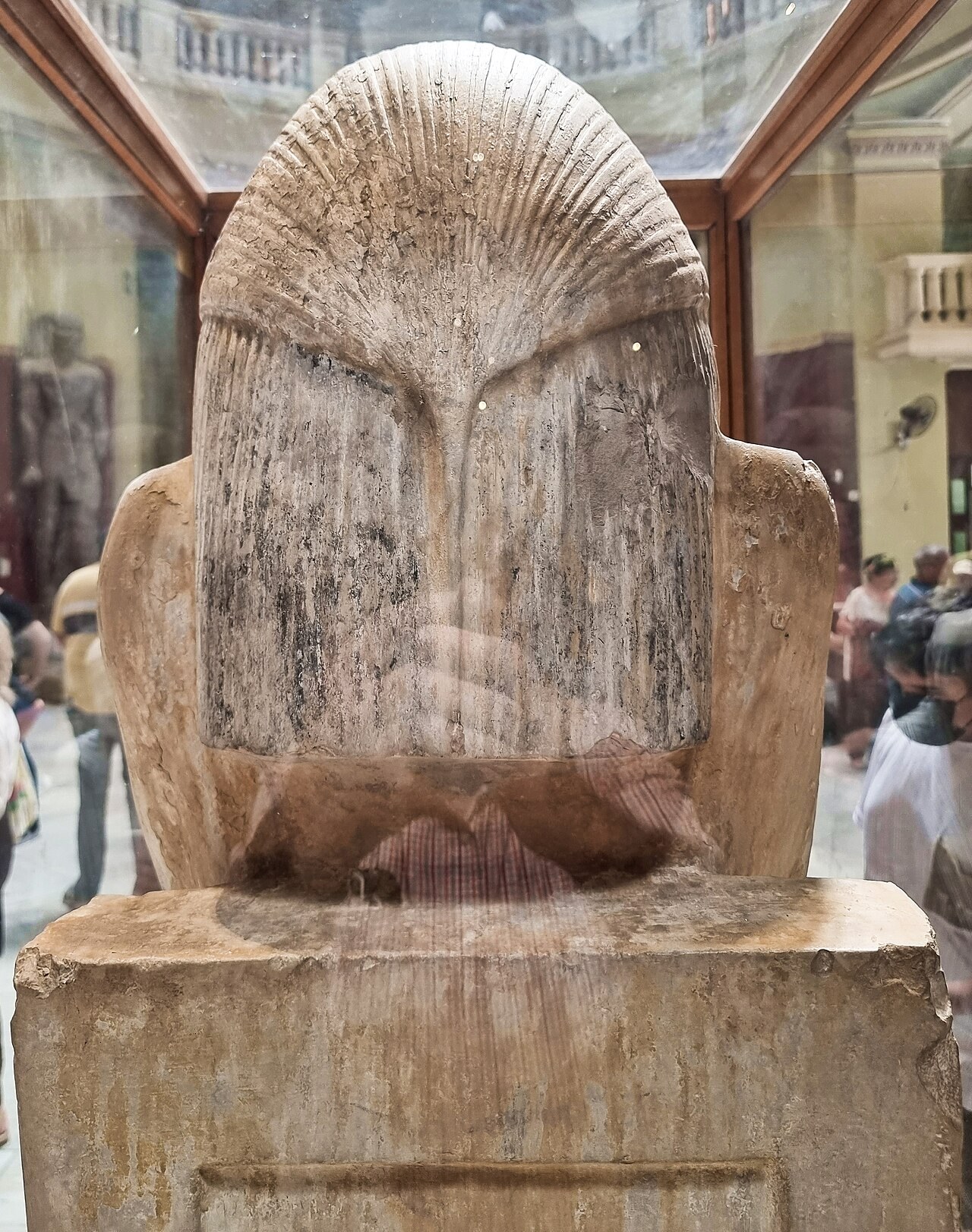
A museum label is a compact argument. It may combine direct observation, an inscription, archaeological context, comparison and modern interpretation in fewer than one hundred words. Read it slowly enough to see those layers.
Look before the label names the object
Spend thirty seconds with the object first. Record material, scale, shape, surface, damage, visible joins and the direction from which it seems designed to be approached. Do not guess a dynasty or owner yet. This opening observation gives you an independent baseline and stops the printed category from deciding what your eyes are allowed to notice.
Separate identification from interpretation
“Limestone statue,” “found at Saqqara” and an inventory number are identification. “Represents royal renewal” is interpretation. Both can be well supported, but they rest on different evidence. Mentally mark each sentence as description, context, translation or claim. If the label moves quickly between them, ask which physical feature or documented find connects the steps.
Find the basis for the date
A precise reign may come from a name, title, excavation layer or close stylistic comparison. A broad range signals different evidence. Look for phrases such as “reign of,” “probably,” “style of” or “Dynasty 5–6.” Do not convert an approximate museum date into certainty in your notes. Record the range and the stated basis when it is supplied.
Treat the object number as useful evidence
Inventory and excavation numbers are not visual clutter. They distinguish similar objects and can connect a display with a catalogue, excavation publication or official collection record. Copy the exact number before taking a wider gallery photograph. A name such as “seated official” may match dozens of works; a museum number creates a route back to this one.
Read translations as selected views
A translation makes language accessible but cannot reproduce scale, placement, direction, repetition or damaged signs. Notice whether the label translates the whole inscription or an excerpt. Names and titles may identify institutions and relationships as well as individuals. If uncertain readings are shown with brackets, question marks or ellipses, preserve them rather than smoothing the text into a complete quotation.
Notice what the label cannot fit
Short labels often omit excavation history, conservation, debate and later ownership. That absence does not prove concealment; it reflects format and audience. Decide which missing fact would most change your reading: original room, associated objects, modern reconstruction, or reason for attribution. One focused follow-up question is more useful than expecting a wall label to be a complete publication.
Compare labels across one gallery
Select three related objects and compare the order of information. Does each label begin with ruler, material, site or function? Which objects receive a named maker or long interpretation? Consistent structure helps navigation, while variation reveals curatorial priorities. The comparison turns labels themselves into evidence for how the museum organizes expertise and attention.
Return to the object after reading
Look again and identify one feature the text made visible, one claim you cannot verify in the gallery and one observation the label did not mention. This final pass keeps scholarship and close looking in dialogue. The goal is not to “catch” the museum, but to understand where its compressed story comes from and where it remains open.
Primary sources reviewed 28 July 2026: GEM collection ↗ · Egyptian Museum ↗. Displays and visitor conditions may change.