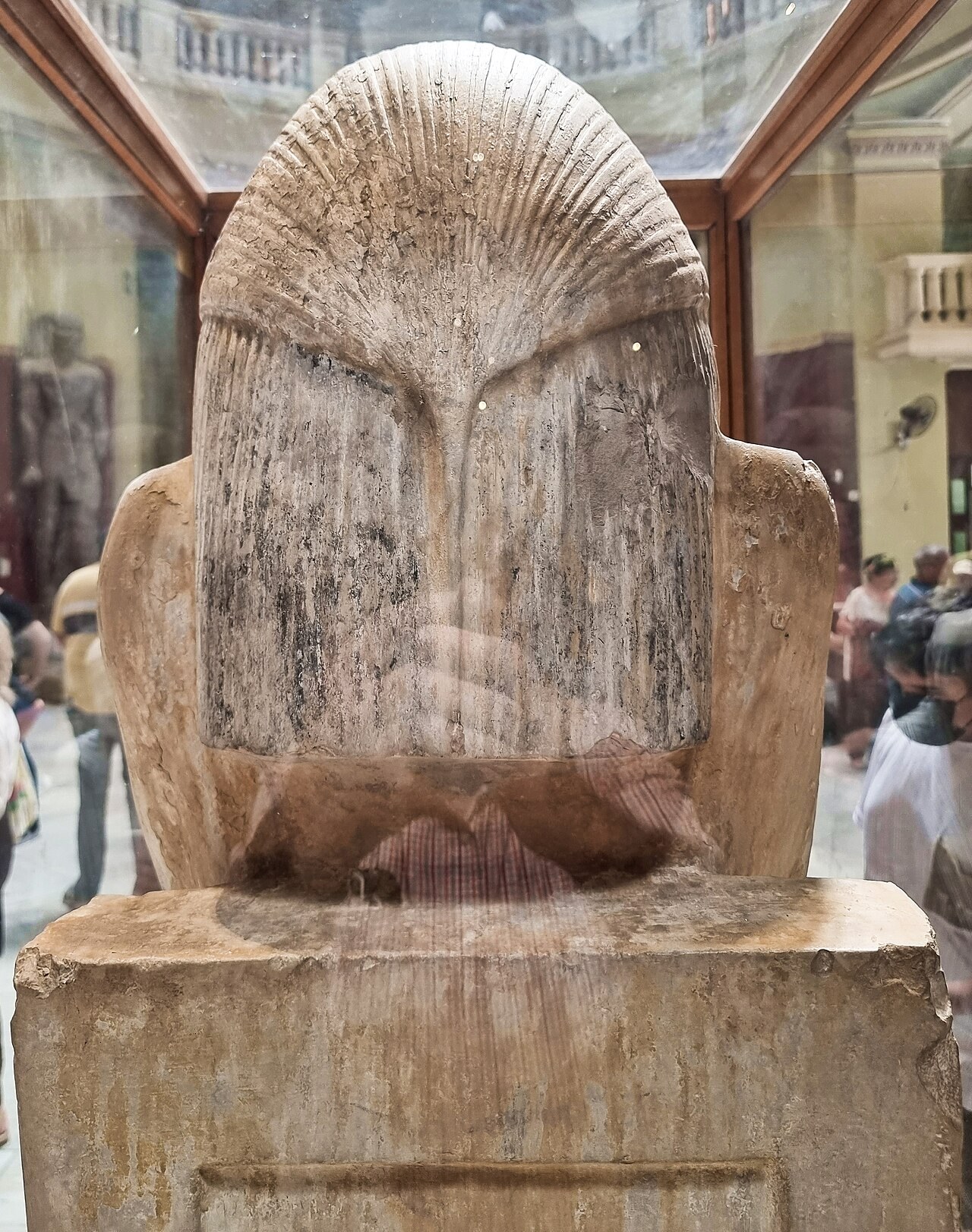
Royal images do not simply record what a ruler looked like. Material, scale, pose, inscription, setting and later alteration worked together to make claims about office, legitimacy, devotion and memory.
Begin with pose before identity
Standing, seated, kneeling, striding and offering bodies create different relationships with viewer and deity. Record support, direction and whether the figure was designed for a wall, shrine or free-standing approach. A familiar crown may help identify royal status, but pose and setting explain how that status operated in this particular object.
Separate person from office
A label may name a ruler from an inscription while the face follows an established royal form. Avoid choosing between “portrait” and “symbol” too quickly. Ask which features individualize, which connect the figure with earlier kingship and which communicate age, power or ritual suitability. Royal identity can be both specific and institutional.
Read scale relationally
Large size matters only in relation to architecture, neighboring figures and viewing distance. A small royal image in a portable or restricted setting can carry concentrated authority; a colossal statue organizes public space. Museum display often places both at comfortable viewing height, so reconstruct the original physical relationship before comparing impact.
Use inscriptions as part of the image
Names, titles and epithets can identify the ruler, deity, action and intended setting. Notice where the text sits and which direction signs or figures face. A translated name is not merely a caption attached to the sculpture. It participates in the visual claim and may be the strongest evidence for attribution or later alteration.
Look for reuse and recutting
Royal monuments could be moved, reinscribed, usurped or built into later structures. Changes to name rings, crowns, facial details and block edges can preserve political history. Do not describe every alteration as vandalism. Establish when it happened and whether it served succession, reuse, religious change, practical building or modern restoration.
Compare material choices
Stone type, metal, wood and surface finish affect durability, cost, color and permitted detail. Material may connect an image with quarry networks, workshop skill and intended environment. Avoid assuming harder or rarer stone automatically meant greater importance. Size, labor, placement and ritual role produced value together.
Restore the other people around the king
Officials, craftspeople, priests, family members and deities make royal power visible as a relationship. A museum case may isolate the ruler because of fame or preservation. Search nearby for administrative titles, workshop traces or associated figures. The most useful comparison may be a modest object that reveals the institutions behind the royal image.
Compare displays, not only rulers
GEM can emphasize ancient scale and sequence; Tahrir adds the history of archaeological display; Luxor reconnects images with Theban sites. Carry one question between institutions: pose, recutting, material or findspot. The different curatorial frame will change what counts as the central evidence.
End with the image's surviving limits
A statue without its base, inscription or original room cannot answer every question once attached to it. Damage may remove the very feature used for identification; restoration can stabilize form without restoring context. List what is missing alongside what survives. This keeps a compelling face or monumental body from becoming false certainty and directs later research toward the evidence that would actually change the attribution.
Primary sources reviewed 28 July 2026: GEM collection ↗ · Egyptian Museum ↗ · Luxor Museum note ↗. Displays and visitor conditions may change.