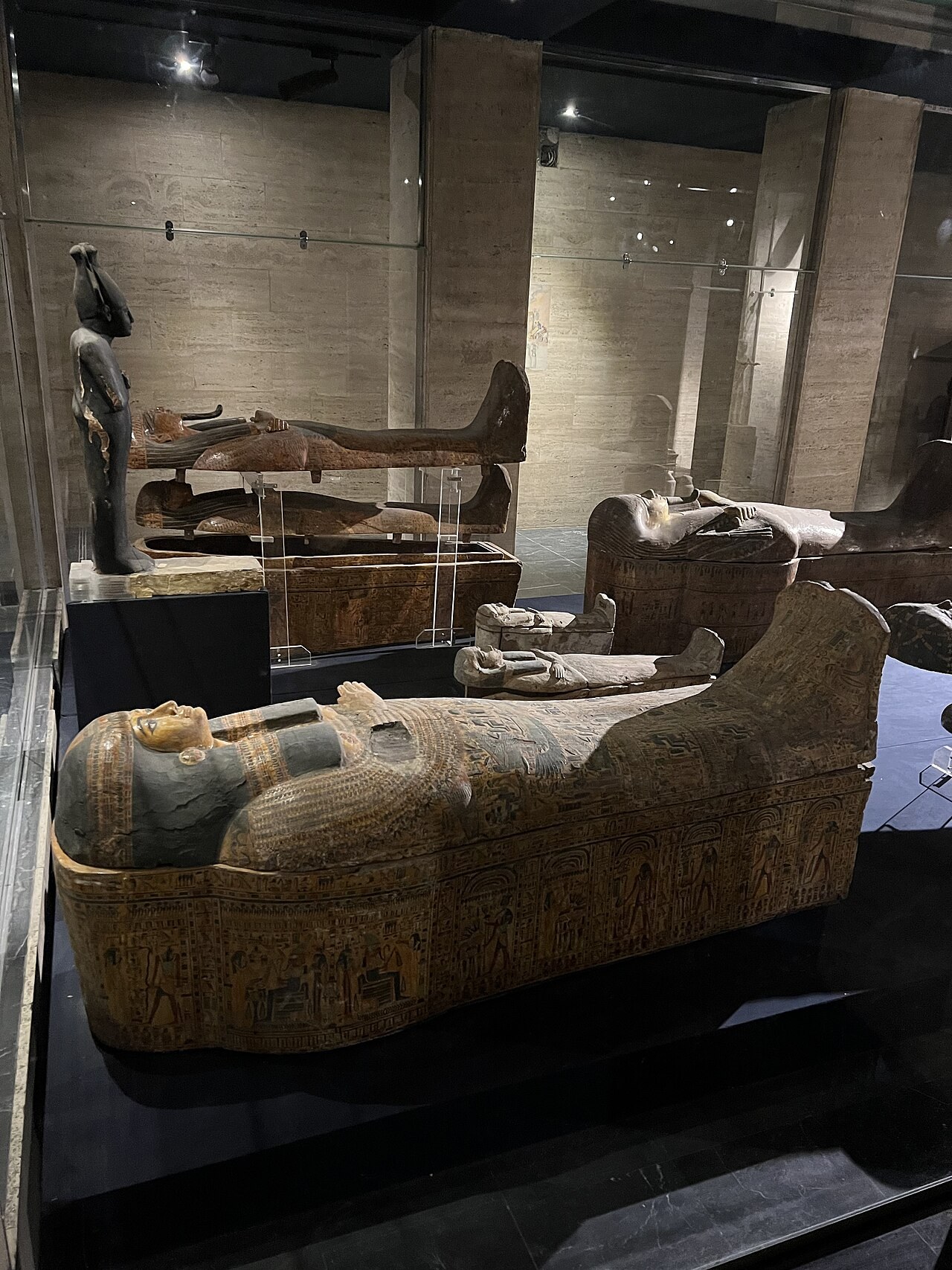
Provenance is not one place name. It is the documented sequence from an object's ancient setting through discovery, excavation, ownership, transfer, conservation and display. Each stage answers a different question.
Begin with findspot, not a broad region
“From Luxor” may mean a temple precinct, settlement, tomb, cache or an uncertain market attribution. Look for the most specific location the label provides and note its confidence. A recorded room, burial shaft or excavation unit can connect an object with architecture and associated finds; a regional name alone supports a much more limited reconstruction.
Distinguish original setting from place of discovery
Objects moved in antiquity. Stone was reused, burials were disturbed, statues were cached and portable goods circulated. The place excavators found an object is evidence, but not automatically the place it was made or first used. Labels may use “found at,” “from” and “made for” differently. Preserve those verbs because they mark separate claims.
Keep archaeological groups together in your notes
An object found with containers, tools, human remains or architectural fragments may gain meaning from that group. Museums often separate the pieces by material, date or display needs. Copy any tomb, cache or excavation number shared across labels. It lets you reconstruct relationships that the gallery layout has made less visible without assuming every nearby object belonged together.
Ask how the object entered the collection
Excavation allocation, transfer from another public store, donation, purchase and older collection history are not equivalent routes. Acquisition information may be brief or absent in the gallery. When available, it explains why certain sites, periods or object types are strongly represented and why documentation quality varies across a collection assembled over many decades.
Use gaps honestly
“Unknown provenance” does not make an object meaningless. Material, technique, inscription and comparison still provide evidence, but claims about ancient setting must remain narrower. Do not fill a gap with the place where a similar object was found. Write “findspot not stated” and continue with the questions the surviving evidence can actually support.
Trace conservation as part of the route
Cleaning, joining, fills, mounts and environmental controls shape what is visible today. A restored object has not stopped being ancient, but its present appearance includes modern decisions. Read treatment notes where supplied and distinguish clearly between an ancient repair, an old museum restoration and recent conservation. Their purposes and evidence differ.
Notice movement between institutions
Objects can be transferred to a specialist museum, placed on temporary exhibition or reorganized when new museums open. An old guidebook location is not proof of current display. Use the current institution's official information for access and use stable identifiers—not room numbers alone—when following an object across catalogues and changing galleries.
Turn provenance into a timeline
Write five headings: made, used, deposited, discovered and displayed. Add only what the label or a reliable source supports. Some boxes will stay blank, and several dates may fit one heading. The resulting timeline makes uncertainty visible while preventing a single location or owner from standing in for the object's entire history.
Primary sources reviewed 28 July 2026: Egyptian Museum ↗ · NMEC ↗. Displays and visitor conditions may change.