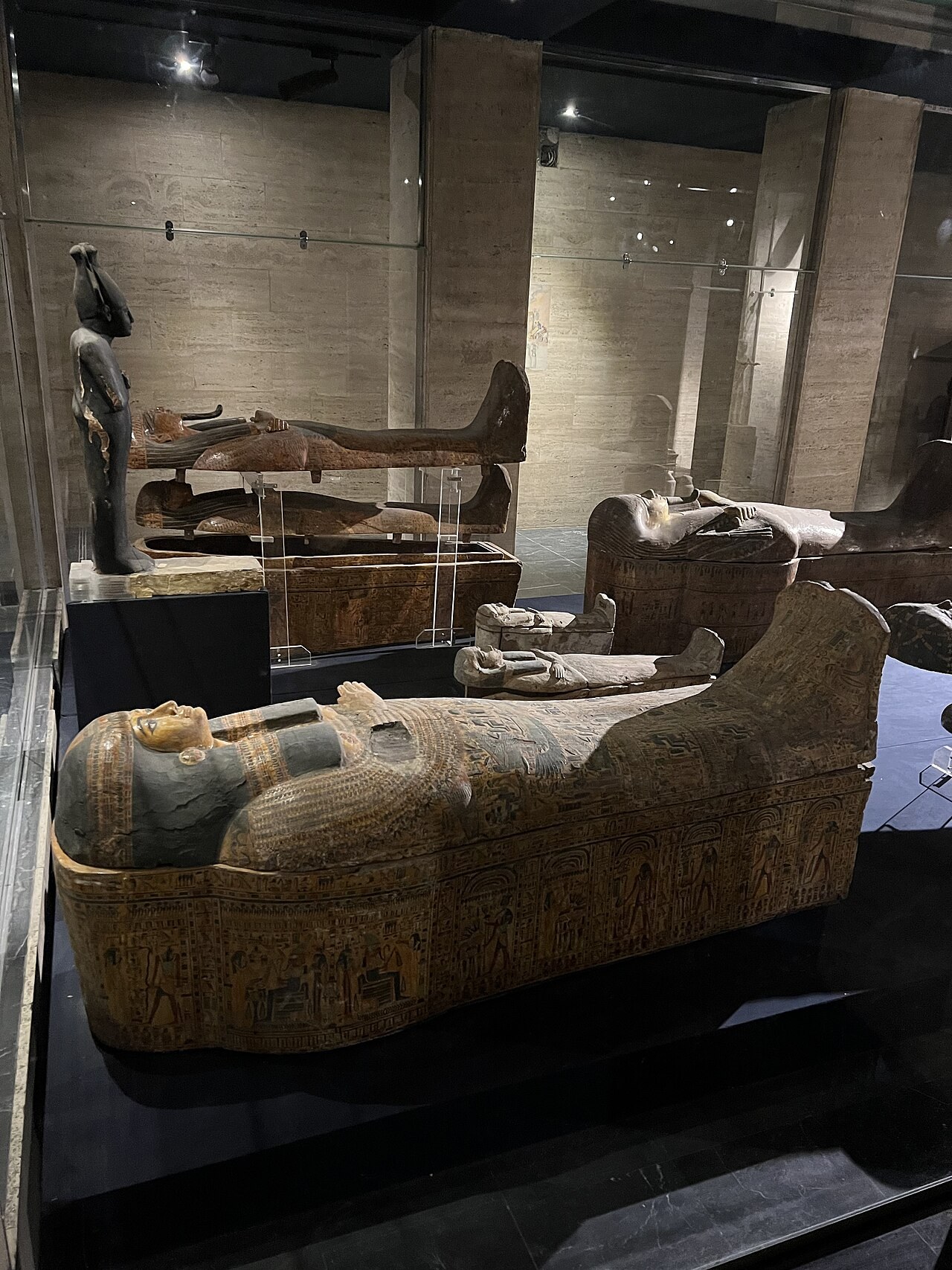
A burial is an archaeological group, not a cabinet of independent masterpieces. Bodies, containers, offerings, architecture, inscriptions and later disturbance must be read together before they become evidence for belief or identity.
Find the scale of the context
“From a tomb” may refer to one chamber, a shaft, a reused family complex or material displaced before excavation. Copy the tomb or excavation number and note whether objects were recorded together. The more precise the context, the more confidently relationships can be reconstructed.
Separate deposition from manufacture
An object may have been made years before burial, inherited, repaired or adapted for funerary use. Date of style, named owner and burial phase may differ. Create separate lines for manufacture, use and deposition rather than assigning every object one date simply because it came from the same place.
Read the container as architecture
Coffins, sarcophagi, wrappings and nested elements organize access to the body through material, image and text. Museum display may separate lids, cases and human remains for conservation or interpretation. Use dimensions and labels to restore the sequence while respecting any restrictions around sensitive human remains.
Keep selection visible
Grave goods were chosen; what survives was further shaped by preservation, disturbance, excavation and collection history. Absence of one object type does not prove it was never present. Compare documented contents rather than a modern ideal “tomb set,” and distinguish the excavated group from items added to a thematic gallery.
Question ownership carefully
A name on one object may identify maker, donor, represented person or intended beneficiary, depending on text and object type. Several names can appear within one burial. Do not assign every uninscribed item to the best-known named individual without the archaeological record that links them.
Notice reuse and disturbance
Tombs could be reopened, expanded, robbed, restored and reused. Mixed dates may record that history rather than an excavation error. Look for displaced objects, altered names, repairs and labels that identify secondary burial. “Intact” is a specific archaeological claim, not a synonym for visually complete.
Hold belief and material practice together
Texts and images address regeneration, protection and identity, while joins, pigments, transport and placement reveal workshop and ritual practice. Neither layer should erase the other. Ask what the object was expected to do and what physical work made that role possible.
Read the museum arrangement as a new group
Cases may reunite a burial, compare several tombs or organize by object type. Check the logic before assuming proximity equals ancient association. Bab el-Gasus material, for example, gains meaning from the documented collective discovery, but any present selection is still a curatorial sample of a much larger history.
Treat human remains as people, not display devices
When a route includes human remains, follow the museum's rules and avoid reducing a person to proof of a medical fact or funerary technique. Read the named identity and documented context where available, but do not invent biography from appearance. Groups may reasonably choose an alternative route. Ethical attention belongs beside archaeological analysis because display decisions shape how evidence and personhood meet in the gallery.
Primary sources reviewed 28 July 2026: Egyptian Museum ↗ · NMEC ↗. Displays and visitor conditions may change.